Instrument Cluster Development
Instrument Cluster Development involves designing, programming, and validating the digital dashboard that displays critical vehicle information — such as speed, fuel level, temperature, and warnings — to the driver.
Instrument Cluster Development involves designing, programming, and validating the digital dashboard that displays critical vehicle information — such as speed, fuel level, temperature, and warnings — to the driver.
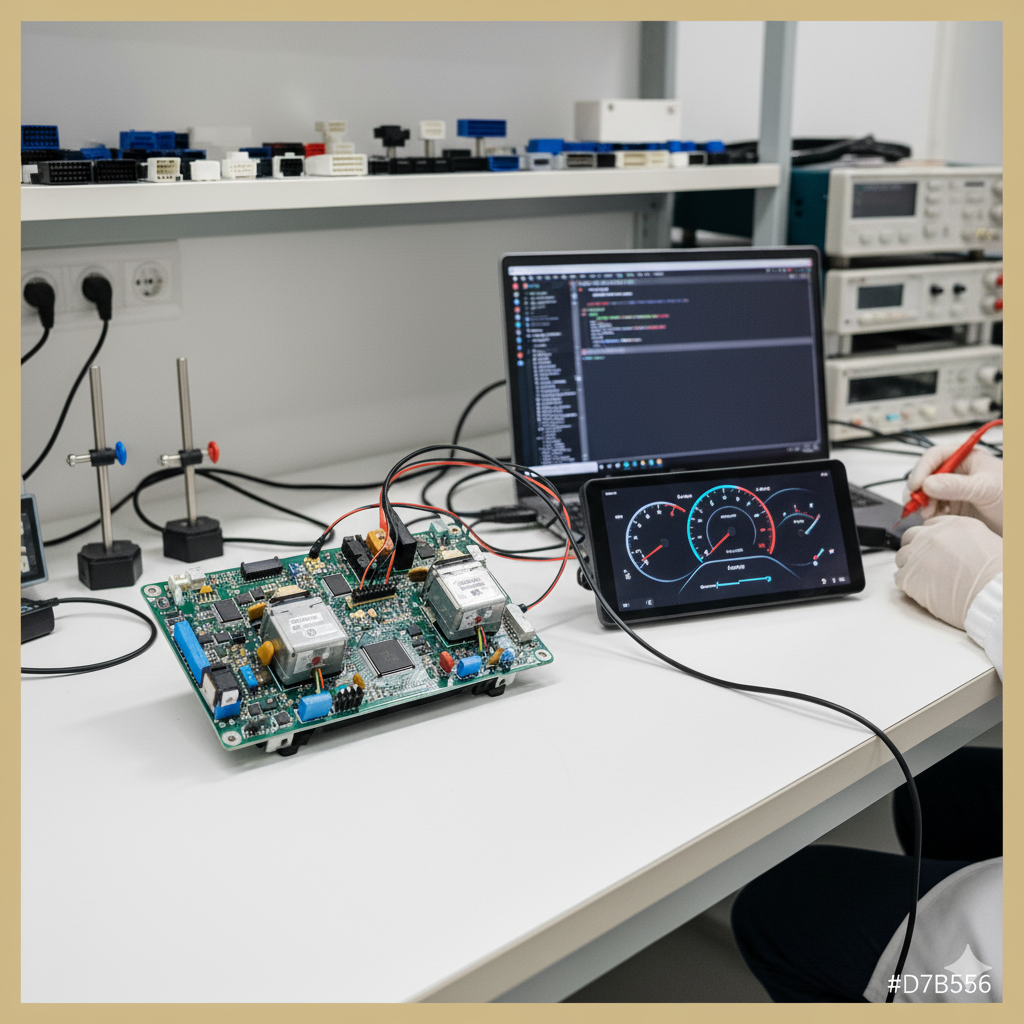
Instrument Cluster Development involves designing, programming, and validating the digital dashboard that displays critical vehicle information — such as speed, fuel level, temperature, and warnings — to the driver.
Politics can be attributed to his perseverance to overcome his personal liabilities, and his desire to constantly become better. Next time you really want to achieve something, take time to focus on your own personal journal. What is your temptation that is standing in your wayv to greatness.
The instrument cluster is no longer just a speedometer — it’s the digital heart of the vehicle. With the shift toward connected, electric, and autonomous vehicles, instrument cluster development has become one of the most critical aspects of automotive innovation.
Modern clusters combine real-time vehicle data, human-machine interface (HMI) design, and advanced communication protocols to deliver an intelligent, customizable, and safe driving experience.
Instrument Cluster Development refers to the end-to-end process of designing, developing, and validating the software and hardware that power a vehicle’s digital dashboard.
It involves:
Embedded software development for data processing and display.
HMI/UX design for user-friendly visualization.
Integration with vehicle ECUs via CAN, LIN, or Ethernet.
Testing and validation for real-time performance, reliability, and compliance.
CAN & UDS Protocols – For communication between the cluster and other ECUs (engine, ABS, airbag, etc.).
Real-Time Operating Systems (RTOS) – Ensures smooth and timely data updates.
HMI Frameworks – Tools like Qt, Android Automotive, or Embedded Wizard help build interactive interfaces.
Graphics Engines – High-quality 2D/3D rendering using OpenGL or similar technologies.
Diagnostics & Flashing Tools – For software updates and in-vehicle validation.
Today’s drivers expect customizable digital dashboards, animated gauges, and clear visual alerts.
Our development process focuses on:
User-centric design: Intuitive layouts and minimal distractions.
Adaptive interfaces: Different modes for driving, navigation, and charging (EV).
Brand customization: Themes and animations that reflect OEM identity.
Requirement Analysis & Concept Design
Identify display functions, communication needs, and performance targets.
Hardware & Software Architecture Design
Define the cluster ECU, communication interfaces, and RTOS environment.
HMI & UX Development
Design visual elements, layouts, and animation flow using graphical tools.
Integration with CAN/UDS
Connect the cluster to the vehicle network and interpret ECU signals.
Testing & Validation
Conduct HIL (Hardware-in-the-Loop), SIL, and on-vehicle testing for reliability.
Enhances driver experience through clear, real-time feedback.
Improves vehicle safety with accurate alerts and diagnostics.
Reduces software complexity through modular design and standardized protocols.
Supports electrification with real-time battery and range displays.
Passenger vehicles (ICE & EV)
Commercial and agricultural vehicles
Two-wheelers and marine clusters
Industrial and off-road dashboard systems
Modern instrument clusters are the interface between driver and vehicle intelligence.
By combining embedded software, HMI design, and ECU integration, automotive developers can create clusters that are smarter, safer, and more engaging than ever before.
If you’re developing or modernizing your vehicle dashboard, our Instrument Cluster Development Solutions provide end-to-end support — from concept to validation — ensuring your product meets both technical performance and aesthetic excellence.

If you were choose the path to the right, the right path, there are new possibilities, achievement, freedom of mind, positive and progressive implications. Think about that as you stand at this place where the path splits. You want to make a decision and commit to one of these paths. Before you make that decision, we are going to see what each path holds for your future.
Have a brand problem that needs to be solved? We’d love to hear about it!
Let’s Get Started